Marriage Compatibility Tarot Reading Online
This is personal insight, not mental-health treatment or medical care. A chart, reading, number, or healing session is not a certain result. If you are in distress, book a counsellor instead.
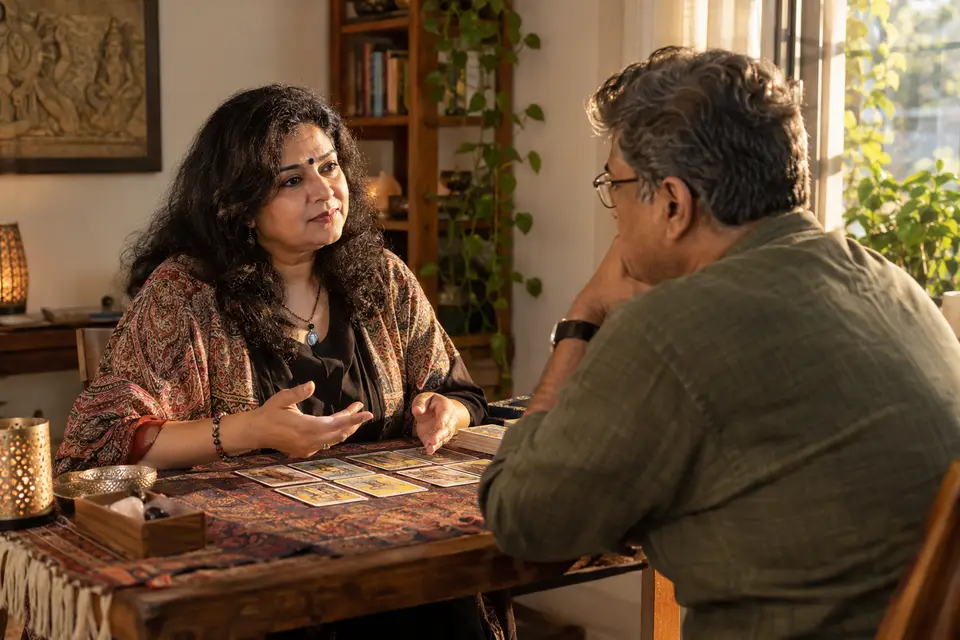
Marriage Compatibility Tarot Reading Online
Are you wondering how well you and a partner might fit for marriage—and whether an online tarot session can help? This guide explains what a marriage compatibility tarot reading online typically covers, what it cannot promise, and how to decide whether a session is useful for your situation.
A few quick notes before we begin: tarot and related charts are tools for reflection and conversation. A chart, reading, number, or healing session is not certain, is not medical care, and is not mental-health treatment. Treat the insight you get as information to use alongside practical planning, conversations, and any needed professional advice.
What a marriage compatibility tarot reading online means
At its simplest, a compatibility reading uses tarot imagery and narrative to explore the dynamics between two people. It can bring attention to recurring patterns, areas of strength, and topics you might not have noticed. Many people book these readings because they want clarity about values, communication, family expectations, finances, or timing.
Readers often mix tarot with other tools—simple numerology, astrological questions, or personality frameworks—but those are extra layers, not guarantees. Think of a session as a focused conversation supported by symbolism, not as a fixed map of the future.
A short example: someone might come in feeling uncertain about whether their partner will accept a job abroad. A reading can highlight the emotional undercurrents—fear, eagerness, worry about family—and suggest conversational places to start. It can help you frame questions to ask each other, rather than handing you an answer.
What a first online session usually covers
Most first sessions run between 30 and 60 minutes. They tend to follow a practical rhythm: introductions, setting boundaries and intention, a card draw, interpretation with dialogue, and a closing summary with suggested next steps.
Introductions and boundaries are brief but important. A good reader will clarify what they do and do not offer: they should not be giving legal, medical, or financial advice. You can state what you hope to get from the session and what you prefer not to discuss.
Setting an intention makes the time more useful. Instead of asking "Will we get married?", you might ask, "What steps can I take to address our different expectations about family obligations?" That kind of question tends to produce concrete, usable items.
The card selection and spread vary. Some readers prefer a three-card spread (you / relationship / partner); others use five or more positions to look at strengths, challenges, and advice. Live video or high-quality photos can make the experience feel more connected; chat or email formats work too, especially for people who process more slowly.
Interpretation is a dialogue. Look for a reader who links symbols to real-life situations and invites your reactions. A useful reading will translate metaphors into practical conversation prompts, like asking your partner about priorities, or suggesting a short experiment in how you divide household tasks.
Practical tips for a smoother session: choose a quiet, private spot; have one clear question and a couple of follow-ups; decide ahead of time whether you will share names or birthdates. You can decline to provide personal data—tarot can work with only the situation you describe.
What marriage compatibility tarot reading online cannot promise
It helps to be explicit about limits. Tarot is not a substitute for regulated professional services. It is not legal counsel, financial planning, medical care, or mental-health treatment. Readings do not guarantee that a marriage will happen, that someone will change, or that a difficulty will vanish.
Cards show tendencies, symbolic patterns, and possible directions—interpretations that can illuminate choices. They do not fix other people’s behavior or produce certainties about timing. Use a reading as a way to gather perspectives and to decide what conversations or steps you want to take next.
How to choose a question for the session
Good questions are specific, focused on your agency, and framed so the reader can point to next steps. Rather than asking for a strict yes/no forecast, try to name the situation you want to influence.
Examples that often work well: ask what the main obstacles are to moving toward marriage and what actions you might take; explore how financial roles are likely to affect your relationship; or ask how to prepare for a conversation with your partner’s family. Those kinds of prompts invite practical suggestions rather than vague reassurance.
Aim for one primary question and one or two follow-ups. A focused session usually produces clearer, more usable guidance.
How to listen and what to ask during the session
When a reader describes a card, you can ask: "How might this show up in our daily life?" or "What is one small, concrete step I could try this week?" If a card points to a challenge, ask for wording you could use with your partner or family. If it highlights a strength, ask how to lean into that asset.
Avoid requesting exact dates, precise predictions of another person’s choices, or asking the reader to mediate interpersonal disputes. If the reading stirs strong emotion, pause and give yourself time to process; a gentle walk or journaling can help you turn insight into next steps.
Choosing a reader and spotting red flags
A good reader explains process, fees, and privacy before the session begins. They ask clarifying questions, invite your responses, and offer practical prompts you can use afterward. Reviews, word-of-mouth referrals, and a short introductory talk can help you decide if a reader’s style fits your needs.
Warning signs include promises of guaranteed outcomes, pressure to buy expensive follow-ups, or requests for sensitive personal or financial information. If a reader insists they can force another person’s behavior or claims a miraculous cure, stop the session and reconsider.
Cultural sensitivity and India-specific considerations
If family expectations, arranged marriage processes, or regional traditions matter in your situation, tell the reader. Cultural specifics—how families usually negotiate weddings, who pays for what, or how much elders are involved—change how compatibility plays out. A reader who understands these realities can connect card images to practical next steps that respect your context.
A brief micro-story: Maya, from a Mumbai joint-family home, used a reading to frame a conversation about her partner’s willingness to live near her parents. The reading flagged the importance of clear roles and timelines; it didn’t decide the outcome, but it helped her and her partner propose a trial plan they both felt comfortable testing.
What usually helps in real life
Tarot can point to priorities, but relationship change happens through repeated, practical actions. Useful moves often include open conversations about expectations (finances, careers, living arrangements), clarifying boundaries with extended family, and setting shared decision-making processes for wedding planning and household responsibilities.
Simple practices—agreeing on who will handle certain tasks, creating a basic budget together, or scheduling weekly check-ins—can reduce friction. Couple these practical steps with what the reading highlights first. If a card points to financial stress, prioritize transparent money talks; if it points to communication gaps, try a short feedback ritual after arguments.
No reading replaces those conversations. What the cards do best is help you decide which conversation to start.
When to seek professional support
Use tarot for insight and reflection. Consult appropriate professionals when needed: lawyers for legal matters, financial advisors for major economic decisions, doctors for medical issues, and licensed mental-health professionals for emotional or relational problems that feel beyond what a conversation or card reading can address.
If there is violence, coercion, or abuse in the relationship, contact local support services right away. Tarot is not a crisis intervention tool and does not substitute for trained help.
Formats, costs, and privacy considerations
Online compatibility readings come in different formats: live video, phone calls, chat, email reports, or automated card pulls. Live sessions typically allow more back-and-forth; written readings give you something to re-read. Free automated tools can surface themes but are often generic.
Costs vary with reader experience, session length, and format. A paid live session generally offers more personalised interpretation than a free automated reading. Before booking, check the cancellation and refund policy, and confirm how the reader stores or disposes of session notes and personal data.
Protect your privacy. Do not share bank details, identification documents, or other sensitive personal information during a reading. If a reader requests anything that feels unnecessary, ask why it is needed and consent only if you are comfortable.
Common questions people ask
People frequently want to know whether tarot can name a specific future spouse, provide exact timelines, or fix in-law problems. Readings can suggest likely partner qualities, timing themes, and approaches to family conversations—but they do not produce guaranteed outcomes. Use what resonates and leave the rest.
Closing thoughts
A marriage compatibility tarot reading online can be a useful way to organize your thinking, prioritize conversations, and find practical steps to try. It works best when paired with candid conversations, careful planning, and professional advice where appropriate. A thoughtful reader helps you ask better questions and keeps responsibility for decisions where it belongs—with you.
Short legal and safety reminders:
- A chart, card, reading, number, or healing session is not certain and does not replace professional advice in regulated domains.
- Tarot readings are not medical, legal, or financial advice. They are not mental-health treatment.
- Do not disclose sensitive personal details (bank details, government IDs) during online readings.
If you decide to book, choose a reader who explains their process, respects boundaries, and encourages your agency. A good session should leave you with clearer questions, a few practical steps, and a stronger sense of what conversation to have next—never with promises that outcomes are guaranteed.
References
 AI
Book a counsellor, or talk to Aasha
Book a session with a licensed counsellor. Aasha is free if you just need to talk right now.